BaleBio
Contemporary re-interpretation of a Bale structure and an expression of local regenerative building practices.
Location:
Mertasari Beach, Sanur, Bali
Completion Year:
2025
Area:
84 m2
Funder:
BMUV (German Federal Ministry for the Environment, Climate Action,
Nature Conservation and Nuclear Safety)
Project Lead:
Bauhaus Earth
Design:
Cave Urban
Project Management:
Bamboo Village Trust
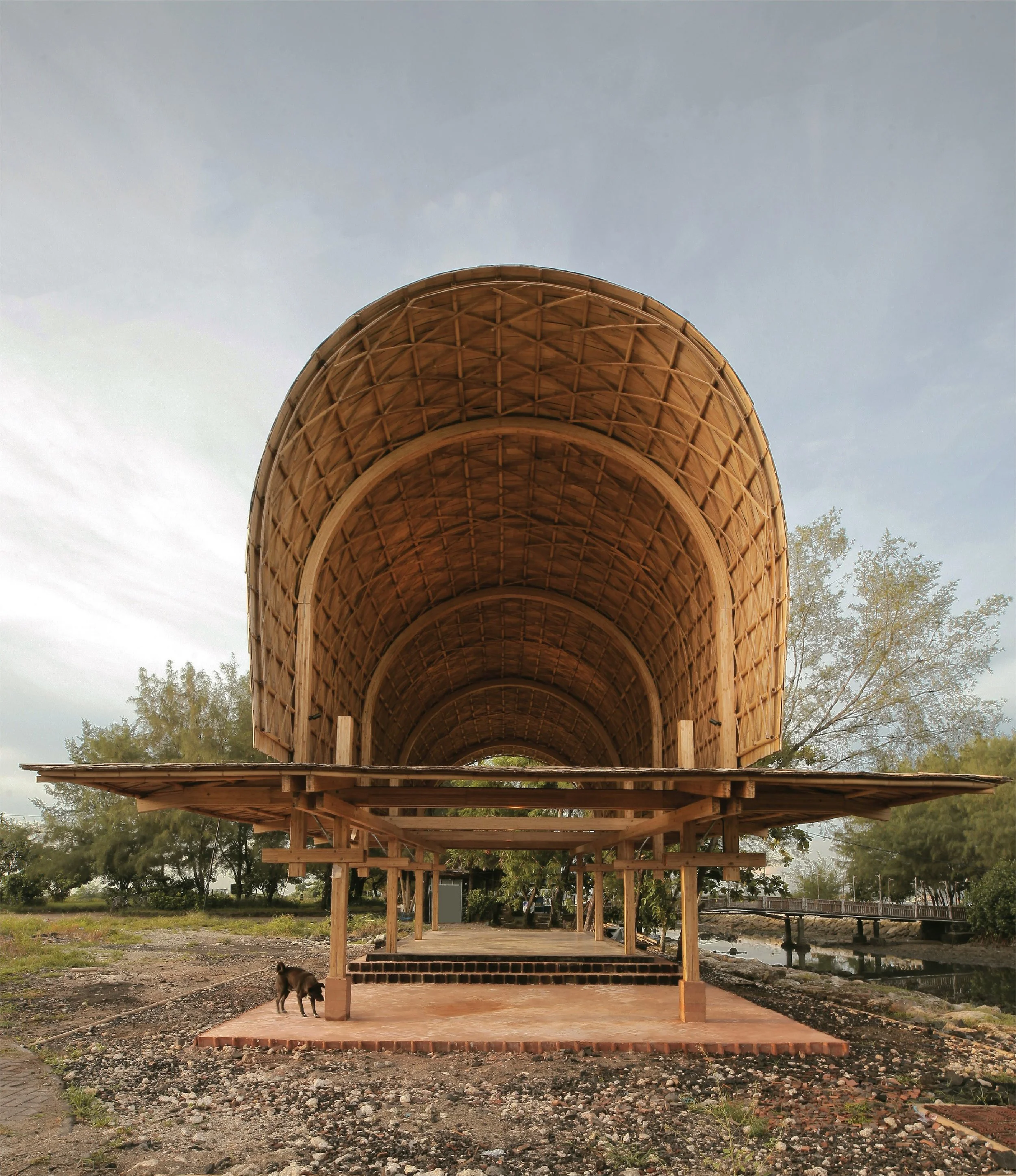
Photo Credit: Iwan Sastrawan
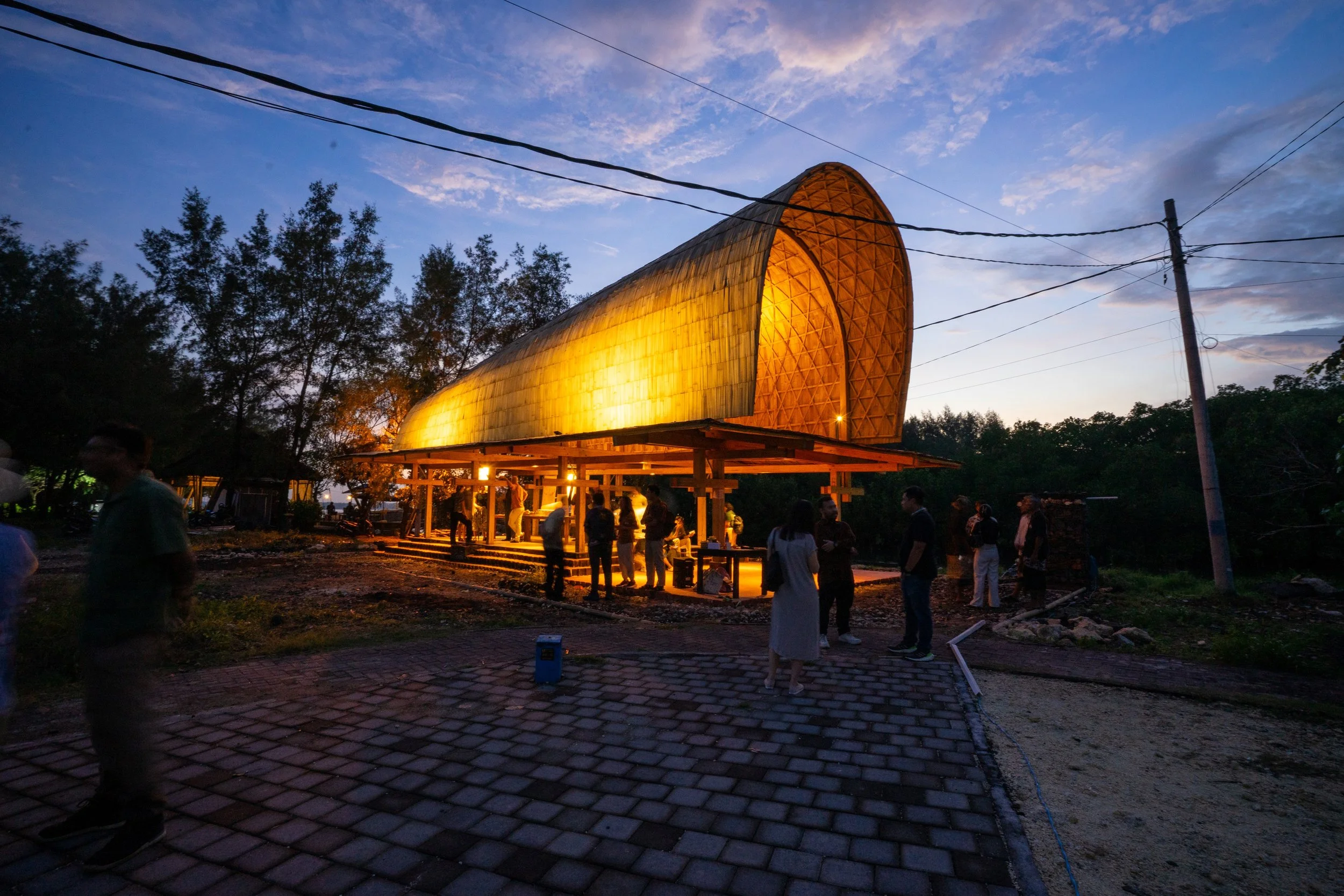
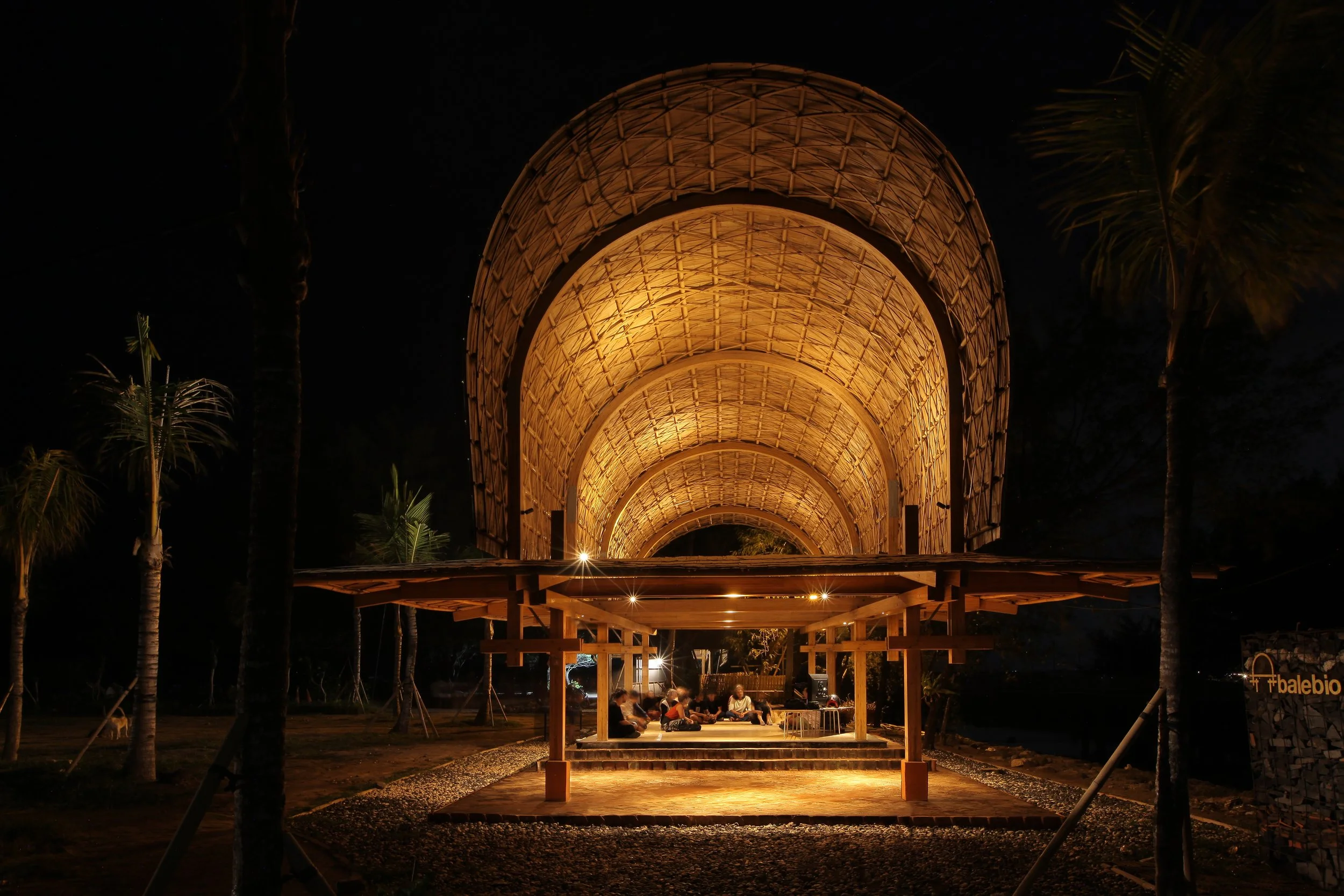
The BaleBio is an 84-square-metre pavilion that demonstrates the potential and elegance of regenerative architecture. It was designed both for and with the local community. Inspired by the Bale Banjar, a traditional meeting hall for social, cultural, and religious activities, found in every Banjar (local village organization) of Bali. It was developed as part of Bauhaus Earth's ReBuilt initiative which explores the concept of a regenerative built environment through four case studies in Berlin-Brandenburg (Germany), Cape Town (South Africa), Denpasar-Bali (Indonesia), and Paro-Thimphu (Bhutan).
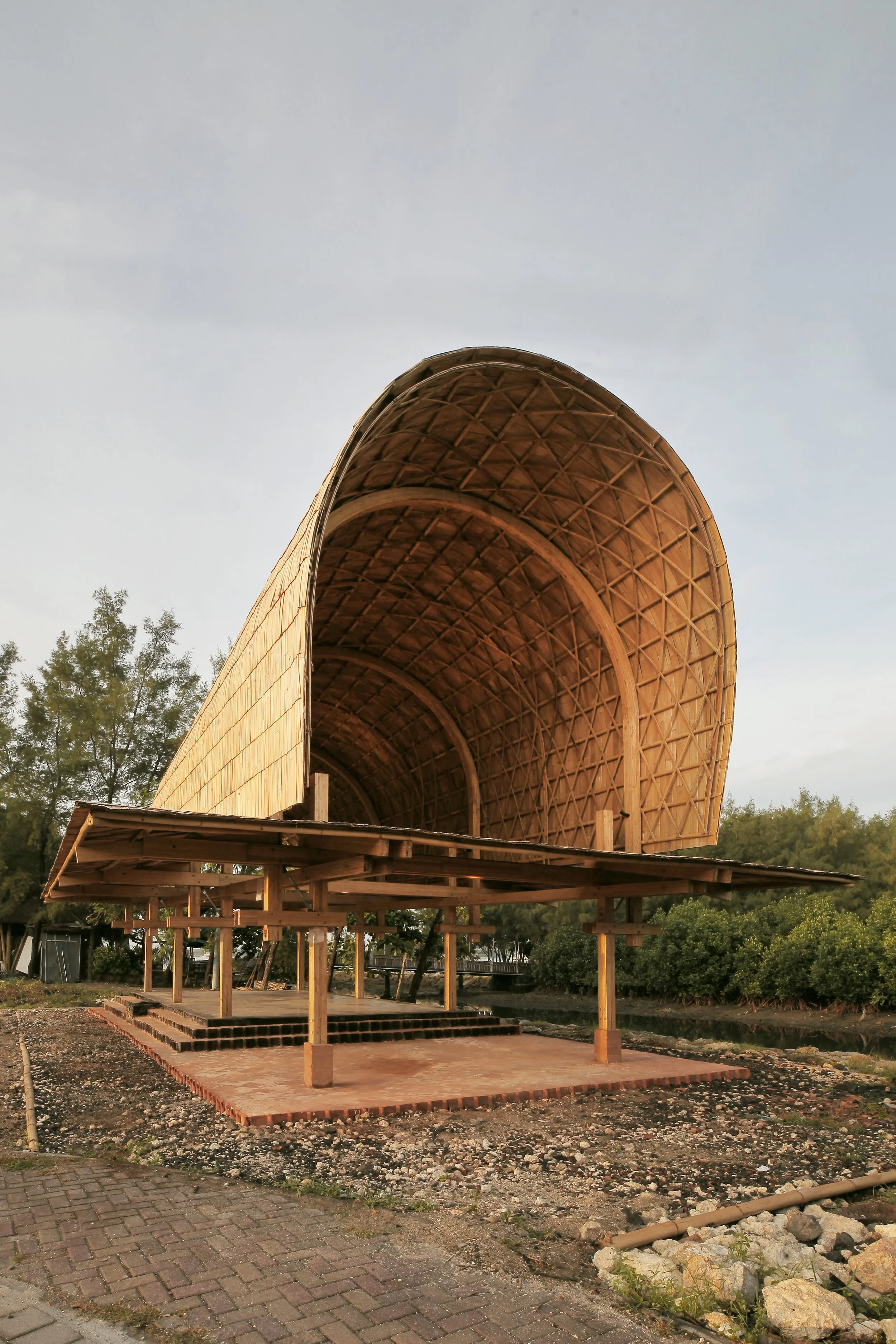
Photo Credit: Iwan Sastrawan
The pavilion tests how regenerative construction can be implemented in Bali by using locally available natural and recycled materials to reconnect architecture with the ecological systems, communities, and landscapes that sustain it. As Bali's first example of structural laminated bamboo construction, the pavilion demonstrates a value chain that connects rural forestry cooperatives in Flores, to local manufacturing in Bali via Indobamboo, and urban construction practices. By uniting forest regeneration, rural livelihoods, local manufacturing, and sustainable architectural design within a single, interconnected system, BaleBio showcases presents locally sourced solutions for reducing the construction industry’s impact upon the natural environment.
The design of the BaleBio was informed by a process of consultation with local partners and community groups, reimagining the typology of the Bale Banjar; the traditional open-air meeting hall found in every Balinese village. The pavilion’s open form, raised platform, and generous roof utilize passive design principles to allow natural airflow and filtered daylight to move freely through the space. The curved laminate barrel-vault roof rises to a height of 8.5 meters over the shore of Mertasari Beach.
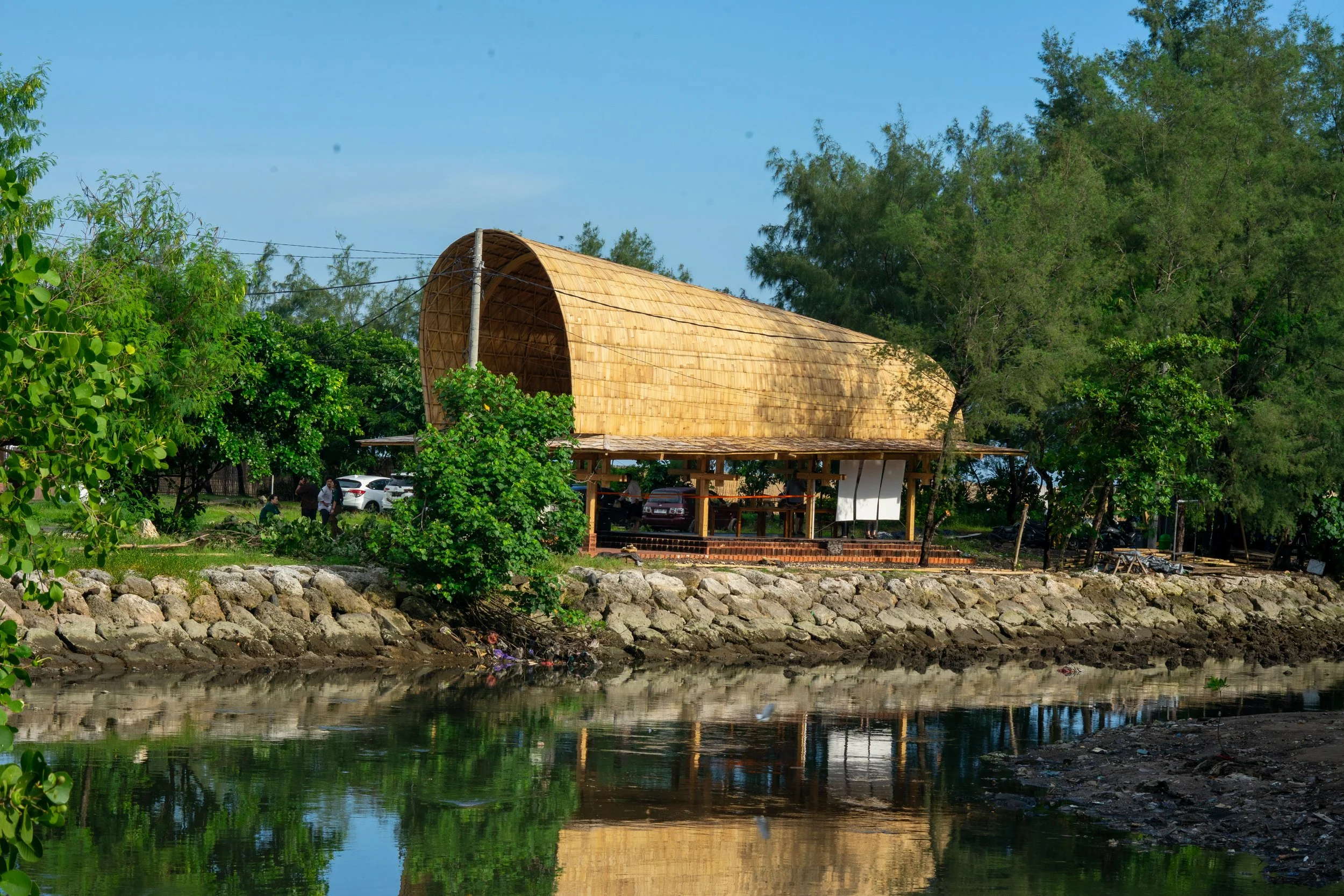
Photo Credit: Iwan Sastrawan
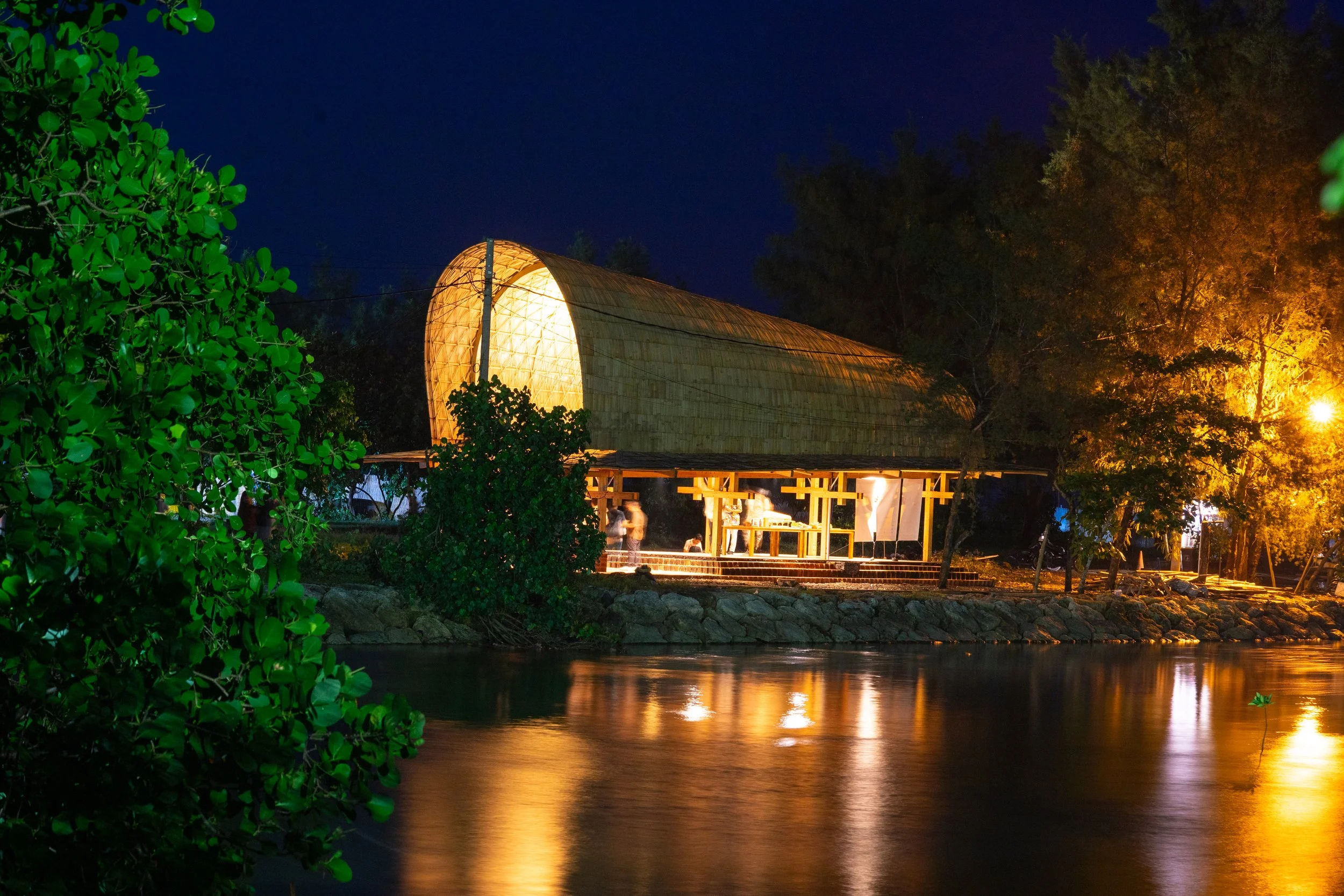
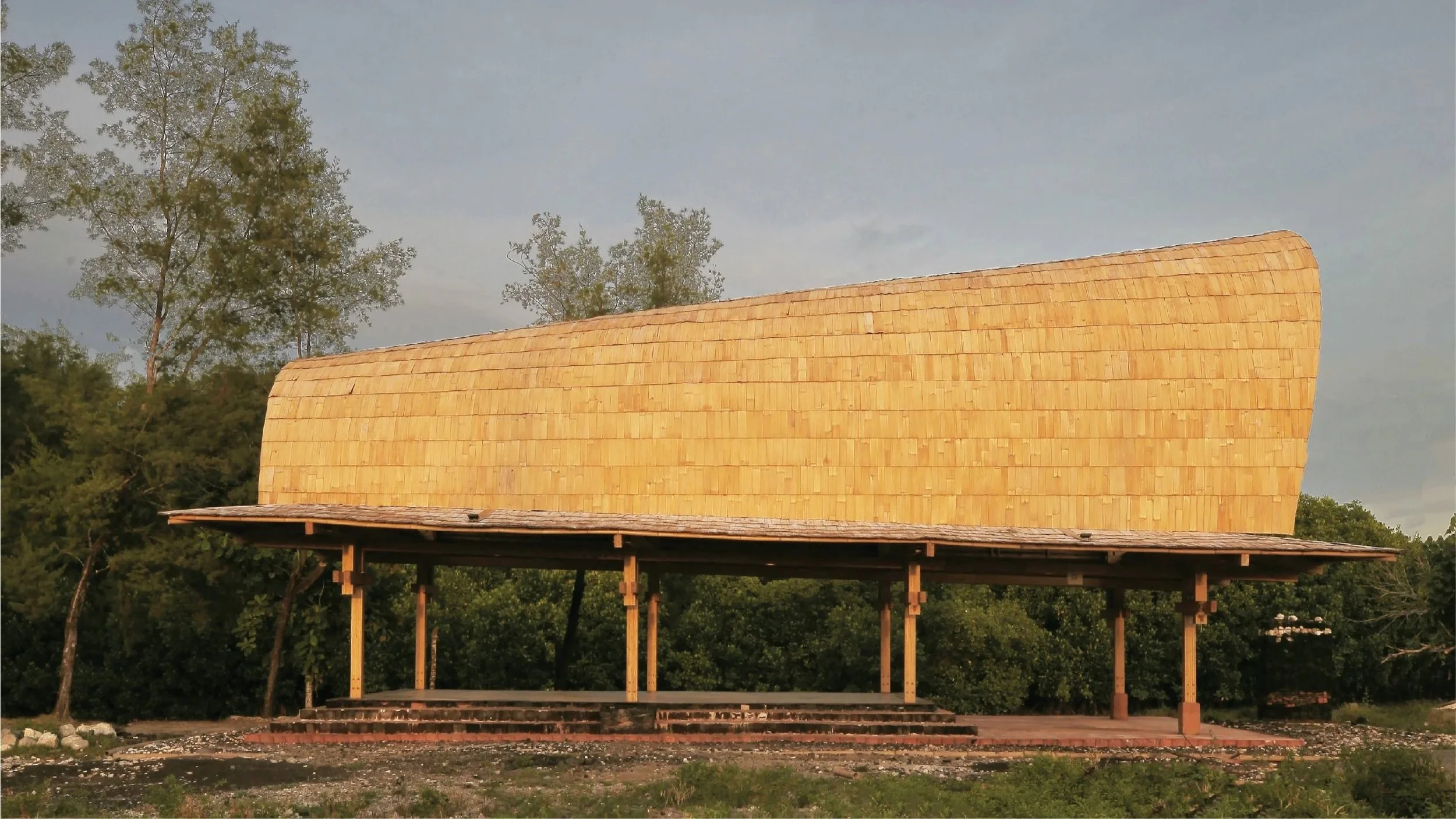
Bauhaus Earth engaged Eco-Mantra to conduct a Whole Building Life Cycle Assessment (LCA) demonstrating a 110% reduction in Stage A carbon emissions compared to a conventional baseline building. While a standard equivalent structure would emit 59,722 kgCO2e into the atmosphere, BaleBio achieved a climate-positive, carbon-negative footprint of -5,907 kgCO2e. This reduction was driven primarily by the pavilion's production stage (A1–A3), where engineered bamboo successfully sequesters carbon, alongside optimized local transport (A4) and construction.
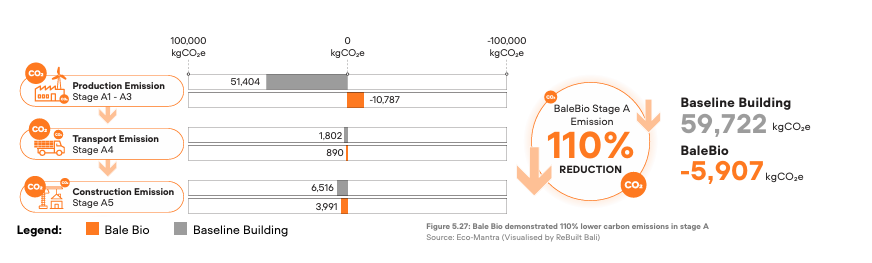
Life Cycle Analysis
Graphic Credit: Furqan Muhammadsyah


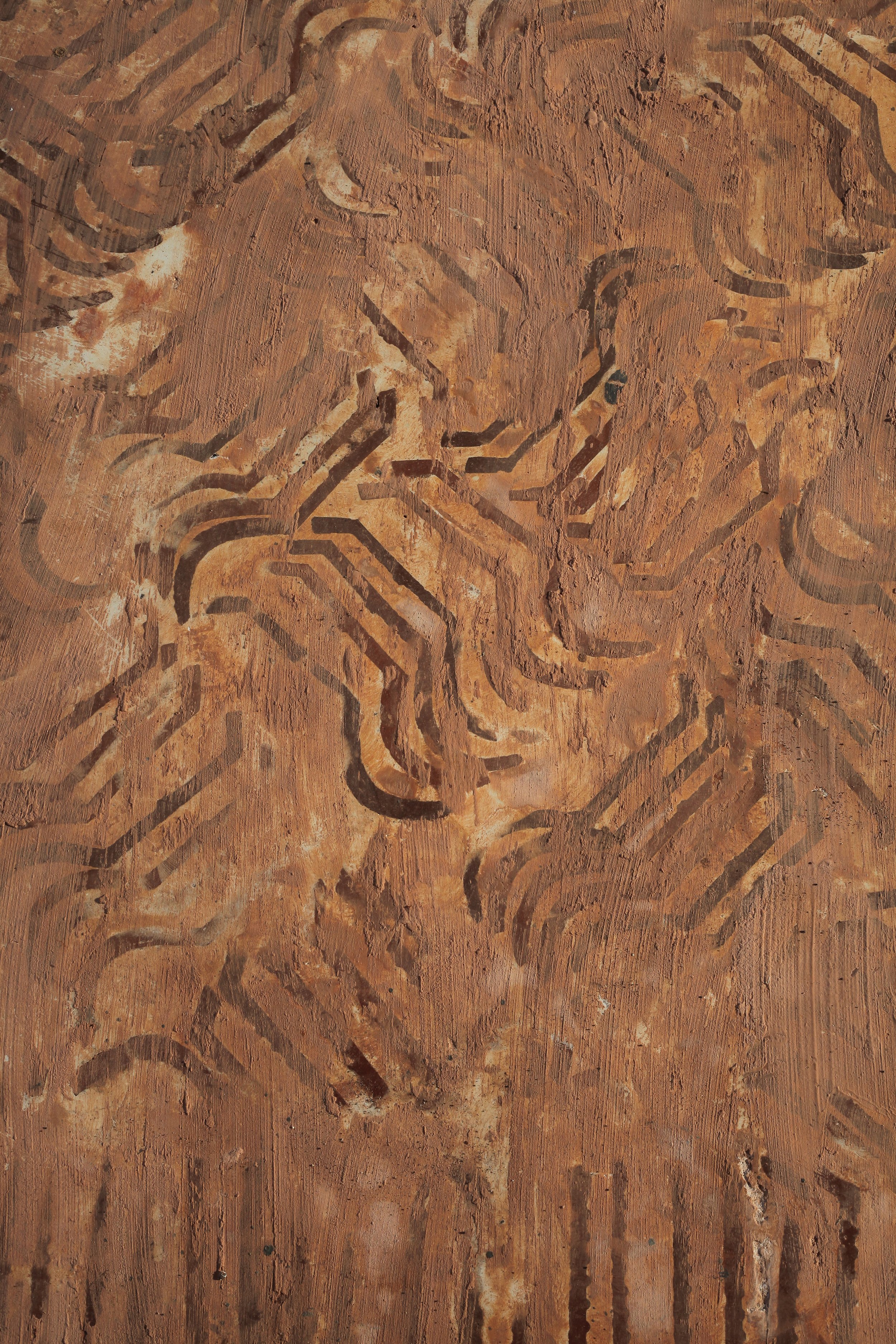
7) Column: Laminate Bamboo Column, From Kusamba Village, Klungkung Bali
5) Floor: Reclaimed Roof Tile
2) Floor: Lime Paster , From Sanur, Bali, 3) Floor: Reclaimed Ulin/Iron Wood, From East Kalimantan
7) Structure: Laminate Bamboo Column, From Kusamba Village, Klungkung Bali
1) Plupuh (Flattened Bamboo), From Belege Village, Gianyar
“The BaleBio draws upon local Balinese vernacular typologies, reimagined through the use of locally sourced natural and recycled materials to create a vision for how construction can have a positive impact on the environment.”
- Jed Long, Cave Urban
Thank you to all of the BaleBio Collaborators ReBuilt Denpasar:
Community:
KotaKita
Warmadewa University
Environmental Engineering :
Eco Mantra
Structural Engineering :
Atelier One
Laminate Bamboo:
IndoBamboo
Materials Supply:
Kaltimber
Bhoomi Earth Studio
Bamboo Pure
Wedoo
Rothoblaas


Publications:
Roots & Roofs - A Playbook for
Regenerative Building Practices in Bali
Roadmap Bali

Partners: